
The Cross and the Contrast
A Picture of Consciousness
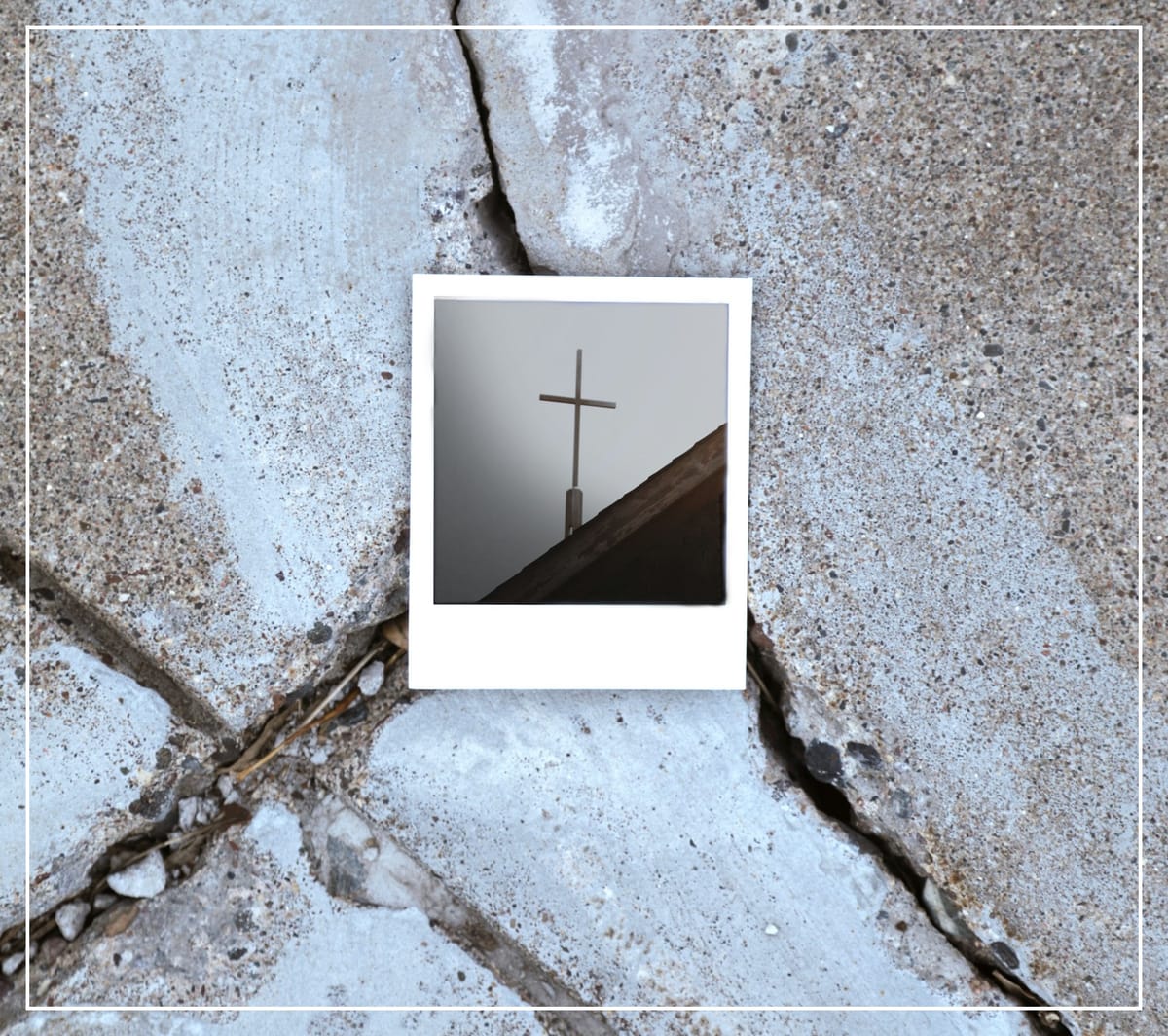
The cross is more than a symbol of sacrifice and redemption—it is also a picture of consciousness itself. Its shape reveals a mystery: the horizontal and the vertical, the natural and the spiritual, the temporal and the eternal.
The horizontal beam represents our natural consciousness, our awareness of life through the senses. It’s how we experience ourselves in this world—through touch, sight, sound, and thought. This is the realm of the everyday, where we learn, work, and love. It’s the awareness that defines our place in time and space, the life of the “outward man,” as the Apostle Paul said.
The vertical beam represents spiritual consciousness—our awareness of the unseen, of that which transcends the physical body. This is the inner knowing that we exist beyond what our senses can perceive. It’s the life of the “inward man,” the part of us that communes with the eternal, reaching beyond the limits of the visible world into the presence of God.
Through the cross of Christ, these two dimensions meet. Jesus stood at the intersection of heaven and earth, uniting what was separated and opening a way for humanity to live in both realms at once. Through His death and resurrection, we were restored to the capacity to perceive the eternal while still living in the temporal—to ascend and descend, to walk in both natural and spiritual awareness.
Paul wrote of this dual reality when he said:
- “Even though our outward man is perishing, our inward man is being renewed day by day.”
- “He raised us up together and made us sit together in heavenly places.”
- “If you’ve been raised with Christ, seek those things which are above.”
- “The natural man does not receive the things of the Spirit of God… for they are spiritually discerned.”
This matters deeply because each of us is on a journey of spiritual growth—constantly moving between the horizontal and vertical dimensions of life. In peaceful times, we dwell mostly on the horizontal plane, absorbed in the beauty and activity of the world. But when trials come—when the sky darkens and we feel vulnerable—we instinctively look upward. We reach beyond ourselves and rediscover the vertical, the eternal.
It’s in these moments that we begin to ascend, to see ourselves not merely as earthly beings but as spiritual ones, seated with Christ in heavenly places. We begin to remember our true origin and the Source of our existence.
This journey—this rhythm of descent into daily life and ascent into spiritual awareness—is not always easy. Yet it is the very heart of our transformation. The cross reminds us that we are both of the earth and of heaven, living at the sacred intersection where human and divine consciousness meet.
Here, at the center of the cross, we find our balance, our purpose, and our truest identity.